


Total Property -
Alpine anytime
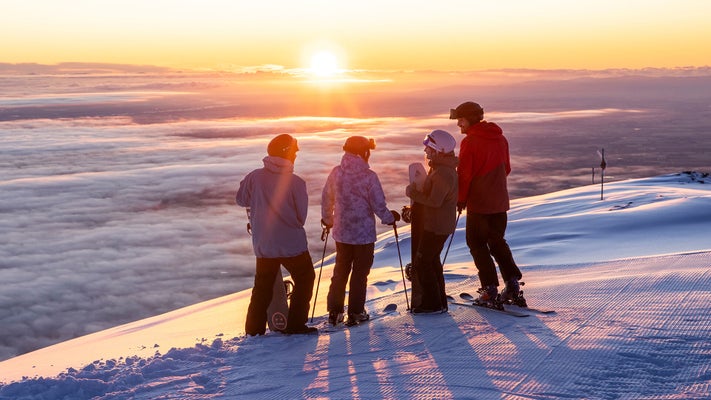
Photo credit: Graeme Murray
Global research confirms that major alpine markets are transitioning from seasonal winter resorts to fully fledged year round destinations, and capital is following.
It is clear that Queenstown is no longer defined solely by its alpine high season, or Coronet Peak, The Remarkables, Cardrona and Treble Cone. The town’s appeal now stretches across the year, driven by an expanding network of walking trails, biking tracks, adrenaline tourism, golf, fine dining, health and wellness offerings, and a new wave of hotel development. With major projects such as the nearby Ayrburn hospitality precinct reshaping the visitor experience, Queenstown has firmly established itself as a world class, four season destination.
This evolution closely mirrors what global research is highlighting across the European Alps. Knight Frank’s latest analysis points to a structural reset, finding the alpine property market has shifted from winter playgrounds to year-round sanctuaries, with key locations increasingly viewed as permanent-living destinations rather than purely holiday-home enclaves. Investor buyers are placing greater emphasis on lifestyle-led investment rather than yield alone, with Queenstown’s path aligning with these international trends.
With demand widening and the market shifting firmly into a four season phase, Queenstown’s commercial, residential and lifestyle assets are now positioned as durable, long-term investments attracting interest from both local and international purchasers.
The drivers are similar to those uncovered by Knight Frank research with the Alps market being reshaped by remote-work freedom, post-pandemic lifestyle priorities, limited supply in prime locations, and infrastructure upgrades that improve year-round access. This is a structural shift, and New Zealand’s alpine markets beyond Queenstown are also entering a new phase of sustained demand and investment opportunity.
While Queenstown is a standout market and leads the way across many metrics, planning constraints, infrastructure lag and limited land supply are materially restricting growth, while fast-track approvals and zoning changes are now shaping the future pipeline.
Infrastructural strains
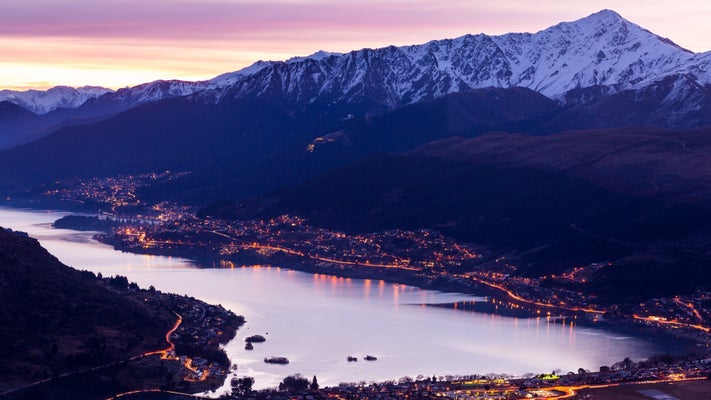
Private company Southern Infrastructure cautions that Queenstown needs to double its infrastructure in the next 15 years to accommodate growth. The firm’s Queenstown Cable Car proposal is progressing through the fast-track approvals process, and would establish a fully electric, zero-emissions cable car network linking the town centre with Frankton, Queenstown Airport and the Ladies Mile catchment. It proposes two main lines, offering consistent all weather travel times of around 20 minutes from the airport to town, and capacity for up to 3,000 people per hour each way.
Work continues on the major State Highway 6/6A Frankton upgrade, with construction through 2026 focused on expanding capacity, adding dedicated bus lanes and replacing the Frankton roundabout with a signalised intersection. NZTA is also reconsidering the planned Howards Drive roundabout, with traffic lights now on the table to ease access for Lake Hayes Estate and Shotover Country. The wider $250 million programme is slated for completion by mid 2028, also delivering new signals at Joe O’Connell Drive and the BP intersection, and prioritising public transport, walking and cycling connections across the corridor.
Queenstown Airport has signalled significant infrastructure investment to keep pace with rising demand. Passenger numbers for the six months to 31 December 2025 reached 1.46 million, up nine percent on the prior year, driven by strong international growth. Major projects under the Airport Master Plan are now gathering momentum, including terminal seismic strengthening, concept design work for a world-class terminal expansion, and advanced planning for a parallel taxiway.
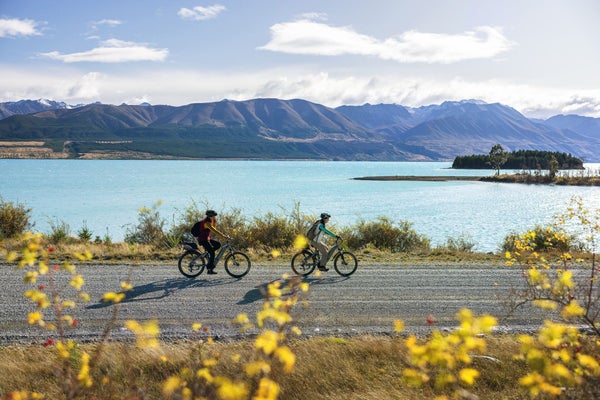
Photo credit: Miles Holden
Commercial insight
Bayleys South Island commercial general manager, William Wallace, says investors are paying a clear premium to secure commercial assets in Queenstown, with intense competition whenever stock comes to market.
“Queenstown is a high-demand market that operates in its own bubble and I don’t see that changing anytime soon. With visitor numbers climbing and major international hotel groups actively scoping opportunities, its status as a headline global location is cemented.
“Queenstown’s retail and hospitality sectors continue to outperform national trends, and commercial vacancy across the town remains exceptionally low. Ongoing infrastructure challenges are a pressure point, but Queenstown is far from alone in that regard.”
Residentially, Wānaka is the town’s most direct competitor, mirroring Queenstown’s lake and alpine setting. While commercial stock in Wānaka’s town centre is constrained, the Three Parks commercial, retail, health and recreational precinct is expanding and expected to double its footprint over the next decade.
Wallace says Queenstown simply can’t absorb future commercial and industrial growth given its land constraints, making Cromwell, less than an hour away, the natural next step for distribution, light manufacturing, office or professional services space.
“Bayleys is marketing Saleyard Business Park, a new 29-unit commercial and industrial development in Cromwell’s established industrial estate, and the sharp entry pricing is striking a chord.
“Alexandra is another halo location that deserves investors’ attention. From a business growth perspective, it’s a market to watch.”
With rental shortages still acute in the Queenstown market, news that Simplicity Living has expanded its planned build-to-rent scheme to provide more than 1,000 long-term rental apartments at Ladies Mile marks meaningful progress, supported by major employers now securing or developing staff accommodation.
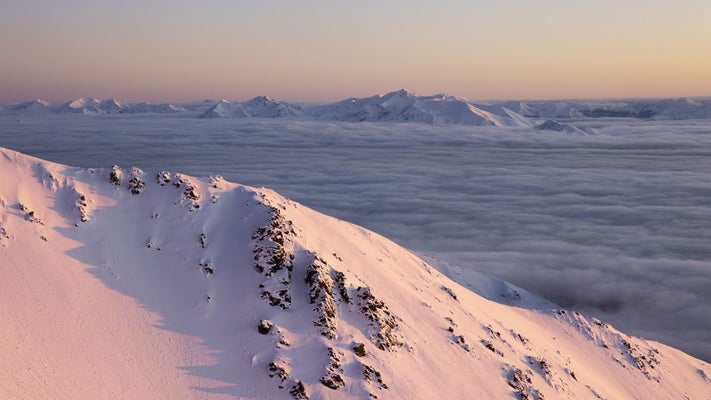
Photo credit: Graeme Murray
Confident market
A recent Xpect Property Limited report describes Queenstown Lakes as “New Zealand’s most expensive and most unusual housing market”, noting that even record per-capita construction has failed to relieve supply pressure. The Queenstown market frequently runs counter-cyclically to Auckland, with values now sitting well above national benchmarks and seemingly immune to post-pandemic market malaise. The $1m–$2m band now anchors the market, lower-priced stock is confined to the fringes, and the $2m–$3m-plus luxury tier is outpacing the rest of New Zealand.
Just under half of all Bayleys Queenstown transactions in the past six months were to local buyers, with nine percent coming from the wider region, 34 percent from elsewhere in New Zealand, and eight percent offshore.
Bayleys Queenstown residential sales manager, Dee McQuillan, says the town’s evolution from a tourism destination into a mature, internationally recognised place to live, work and invest is exciting to watch, with lifestyle and remote-work migration and a steady exodus from Auckland driving strong population inflows. “Median values have firmed, supported by improved confidence around interest rates and a growing acceptance of current pricing levels, and a broader mix of residential stock is now coming to market, from sections and apartments to townhouses, freehold villas, family homes and premium lifestyle options.
“This diversity is giving buyers at all price points genuine choice. Slightly higher than usual inventory has also helped rebalance conditions, providing buyers with greater confidence and the space to assess opportunities more carefully. “
McQuillan says while infrastructure pressures haven’t dampened overall demand, it’s influencing where people choose to live, with areas offering easier access to employment hubs, schools and amenities attracting heightened interest.
“Momentum is clearly building through the southern corridor. Off the back of Hanley’s Farm and Jack’s Point, the next wave of Park Ridge, Homestead Bay and Kingston Village is unlocking new community, lifestyle and employment options that collectively strengthen long term appeal.
“Well-designed, functional housing for Queenstown’s resident workforce will remain in demand and is set to shape the town’s next decade.”
Demand from Australia has lifted following recent financial legislation changes across the Tasman that have strengthened the appeal of investing in New Zealand property.
“Australia remains one of Queenstown’s most influential recreational markets, with proximity, direct flights and lifestyle alignment now driving demand for holiday homes, relocation, investment and retirement options.”
Knight Frank identifies wellness as a defining trend reshaping global alpine destinations, and McQuillan says Queenstown is responding. New openings include Watershed’s floating Finnish saunas on Lake Wakatipu, the Bathhouse Spa Queenstown, and the magnesium pools at Bathe by Aluume. A second Aluume floating sauna, Thermae, is set to open at the Frankton marina this year, while O Studio offers infrared saunas, ice baths and sensory-deprivation float tanks.

Photo credit: Miles Holden
Rising density
Bayleys national director projects, Suzie Wigglesworth, says Queenstown continues to attract local, regional and offshore developers with most new homes delivered to date sitting in the affordable, high-density sector – an area where Gibbons Co. has been particularly prolific.
“However, recent releases of land at Homestead Bay and Kingsview also reflect interest for a lower-density product as existing residents and owners look to upsize in the area. We’ve also seen multiple small developments on existing residential land in central Queenstown, such as Alpine Quarters by Redwood Group with 22 architecturally designed three-bedroom villas.
“Two emerging developers are now influencing Queenstown’s next wave of supply. Clarke Group has purchased the Ladies Mile future development site for a substantial, master-planned community, while Wolfbrook is simultaneously advancing four projects with its Sawmill Road and Gorge Road schemes already sold out, and Robins Road and Twin Rivers Terraces selling now.”
One of the strongest opportunities for both owner-occupiers and investors lies in new-build developments with 365-day visitor accommodation consents in high-growth urban areas, supported by strong local amenity and adequate carparking, says Wigglesworth.
“The flexibility, functionality, and accessibility of these next-generation projects is underpinning Queenstown’s status as a highly sought-after destination.”
Offshore appetite also remains robust, particularly at the high end, with strong interest flowing through the Active Investor Plus visa pathway. Wigglesworth says Australian enquiry on new project development stock has also lifted following recent announcements around tax policy changes there.
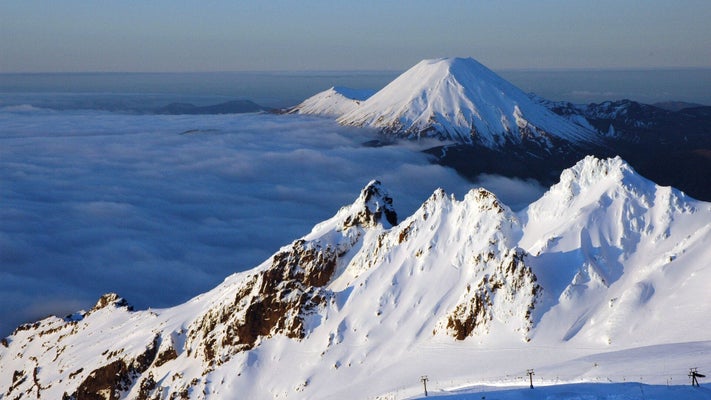
Photo credit: Penny Eggleton
Catalysts for change
The Central Plateau has received a $10.8 million government boost to progress Te Hangāruru cycle trail and to complete Te Ara Mangawhero trail in Ruapehu, strengthening the Mountains to Sea – Ngā Ara Tūhono Great Ride network.
Confidence in the region is being reinforced by the 10-year Ruapehu ski field concessions granted to operators and emerging interest in bringing the shuttered Chateau Tongariro back to life. Although the formal requests for proposals process has only recently closed, one bidder is understood to be targeting a full five-star redevelopment and a wider revitalisation of Whakapapa Village.
Bayleys Manawatū-Whanganui regional general manager, Rachel Thompson, says the Chateau’s restoration would be a positive addition to the region’s accommodation landscape as a premium offering, while supporting and enhancing the visitor experience.
“It would lift visitor numbers, extend stays, support hospitality businesses, and strengthen the district’s standing as a premium alpine destination.
“The region is evolving into a four-season destination, with diverse outdoor experiences widening the visitor base and underpinning more stable property demand.”
According to Thompson, relative affordability is still a major pull, offering buyers a more attainable alpine foothold than competing regions.
“Improved certainty around ski field operations and steady investment in year-round tourism are restoring confidence for investors seeking reliable occupancy and returns, with the prevailing view that the Central Plateau offers compelling long-term potential.”
Enquiry is predominantly from New Zealand‑based buyers, with strong interest from Manawatū‑Whanganui, Waikato, Auckland, and Wellington and 32 percent of recent purchasers coming from within the local area.
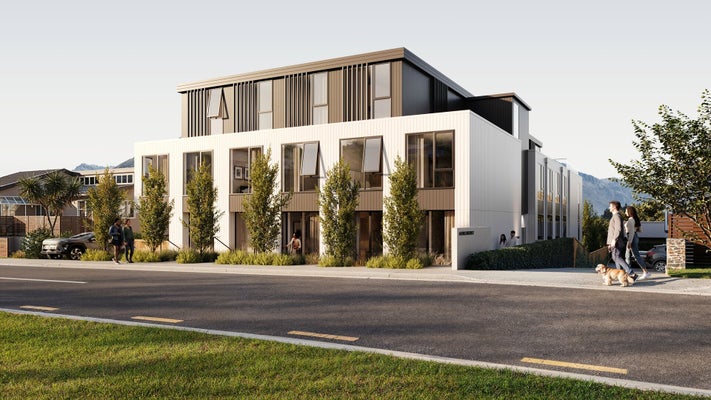
Artist's impression of Le Mont Apartments
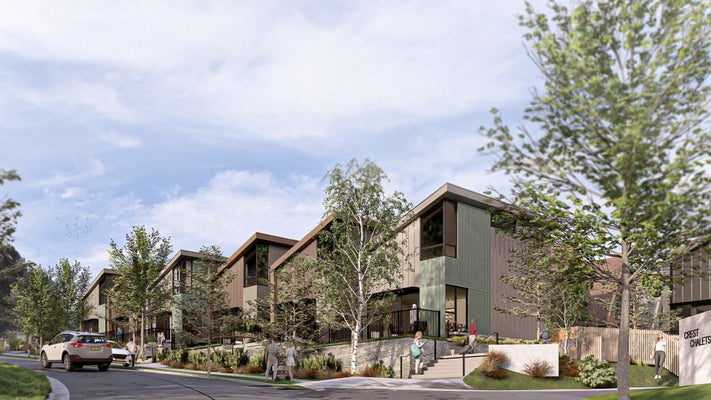
Artist's impression of The Crest Chalets
Meeting the market
Private developer Gibbons Co. has stepped up its activity in Queenstown Lakes. With Five Mile Villas and Lakehouse Villas fully sold, current offerings include:
- Le Mont Apartments: 23 boutique residences on elevated Hallenstein Street, Queenstown, consented for 365-day visitor accommodation.
- Maribel Apartments: 34 freehold dual-key residences on Boundary Street, central Queenstown, consented for 365-day visitor accommodation.
- The Crest Chalets: boutique residential development on Hansen Road, Queenstown, with 100 one- and three-bedroom freehold standalone chalets or elevated cabins, consented for 180-day visitor accommodation.
- The Links Wānaka: new residential community with 257 two-, three- and four-bedroom freehold villas bordering the Wānaka Golf Course.
Also under development
- Private real estate developer Redwood Group is progressing Kawarau Villas, Queenstown comprising two- and three-bedroom residential homes consented for 365-day visitor accommodation in the Remarkables Park precinct with Stage 1 sold and settled, and Stage 2 selling down. Pre-release sales are also open for Lakepoint, Wānaka with 63 three- and four-bedroom freehold homes in a master-planned community near the town centre. Redwood is also behind the consented “The Grove at Wooing Tree” project in Cromwell offering 46 residential units and potentially, commercial visitor accommodation.
- Work has commenced on Stage 1 of the $2 billion-plus Lakeview Te Taumata project by developer 94 Feet on the former Queenstown campground site near the Skyline gondola, progressing a major mixed-use precinct including a hotel, two apartment towers and hospitality/wellness offerings.
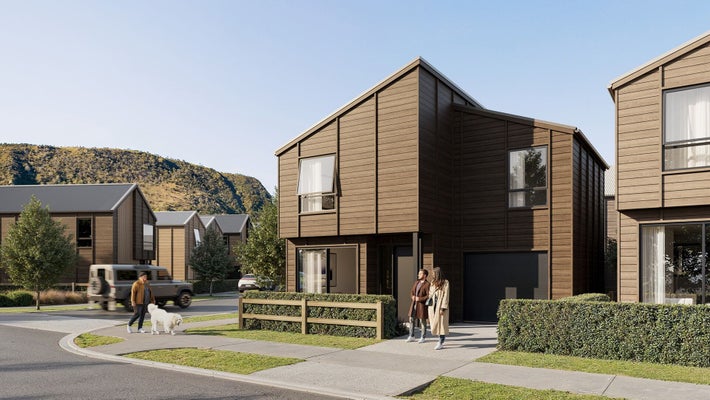
Artist's impression of The Links Wānaka
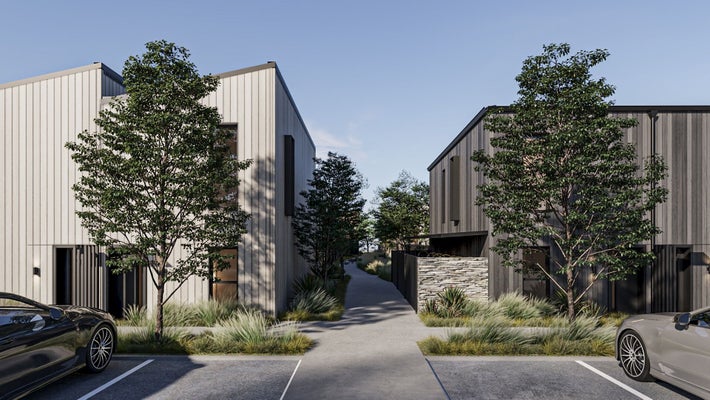
Artist's impression of Kawarau Villas
Contact us


